Library / Papers
Atom Smashing using Machine Learning at CERN
A real-world engineering write-up from CERN on distributed Machine Learning.
By CERN · CERN · Added 2026-10-12
All content belongs to CERN. We only link to it and give credit. Report a problem
Learn this paper
About 37 min left. Your work is saved as you go.
What you are about to study
CERN wrote this paper. Read the abstract and headings first. You should know the basics: caching, queues and replication.
Ideas you will meet
- Distributed Systems
- Consensus, time, failure and the fundamentals of scale-out.
- Machine Learning Systems
- Recommendations, ranking, feature stores and serving models at scale.
What we already know about this
Our own lessons on these ideas. Read them here before you start, so it makes sense.
Big Data and Cloud Data Platforms · 11 minHow big data evolved, and the papers behind itFrom single databases to Hadoop, Spark, streaming and lakehouses: a timeline of ideas and the research papers that started each one.Read here
Why a new wave kept appearing
Each generation of data tools answered a limit of the previous one. Understanding the problem behind each wave makes the tools easier to place.
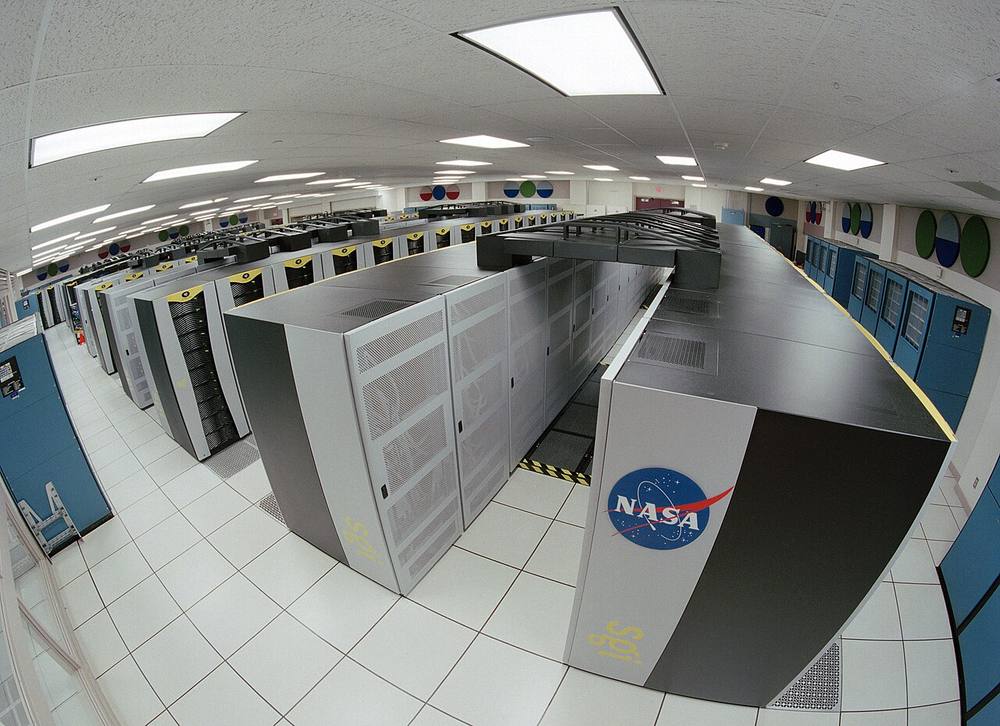 Image: Trower, NASA · Public domain · Source · Wikimedia Commons: Columbia Supercomputer - NASA Advanced Supercomputing Facility
A timeline
100%Figure SDA-BDP-01-1 · A timeline · © forcsguy.com
1. Before: relational databases and data warehouses
Data fit on one big server. SQL and data warehouses served reports. Limits: scaling up got very expensive, and unstructured data (web logs, clicks) did not fit neatly.
2. Web scale (around 2003 to 2006)
Search companies had far more data than any single machine could hold. Google described how it coped, and open-source projects copied the ideas.
- GFS (Google File System): a distributed file system on commodity machines that expects failures.
- MapReduce: a model to process huge datasets in parallel.
- Hadoop (HDFS plus MapReduce) brought both to everyone.
3. NoSQL (about 2006 to 2010)
Web applications needed massive scale and high availability that relational systems struggled to give.
- Bigtable: a sparse, sorted, wide-column store; inspired HBase and Cassandra's data model.
- Dynamo: an always-writable key-value store with consistent hashing and eventual consistency; inspired Cassandra, Riak and DynamoDB.
4. Faster and friendlier processing (2010 onward)
- Dremel: interactive SQL over huge datasets using columnar storage and tree-shaped execution; the idea behind BigQuery and later engines, and the Parquet format.
- Spark (resilient distributed datasets): keeps data in memory between steps, much faster than disk-based MapReduce for iterative work, with friendly APIs.
5. Streaming
Waiting for nightly batches was too slow. Kafka made a durable, replayable log the backbone of event pipelines, and engines such as Flink and the Dataflow model handled continuous computation with proper treatment of event time, windows and late data.
6. The cloud
Cloud providers separated storage (cheap object storage) from compute (elastic clusters or serverless queries). Managed warehouses (BigQuery, Redshift, Snowflake and others) removed cluster management.
7. The lakehouse
Data lakes were cheap but unreliable (no transactions, messy files). Table formats (Delta Lake, Apache Iceberg, Apache Hudi) add ACID transactions, schema evolution and time travel on top of files in object storage, so one copy of data can serve both analytics and machine learning.
100%Figure SDA-BDP-01-2 · Key dates, in order · © forcsguy.com
The classic papers
These are the research papers most often cited. Search the title to find each; most are freely available.
Paper Authors (and year) The idea The Google File System Ghemawat, Gobioff, Leung (2003) Large-file storage across commodity machines, built to tolerate failures MapReduce: Simplified Data Processing on Large Clusters Dean, Ghemawat (2004) A simple map and reduce model with automatic parallelism and fault tolerance Bigtable: A Distributed Storage System for Structured Data Chang and others (2006) A sorted, sparse, multi-dimensional map for structured data at scale Dynamo: Amazon's Highly Available Key-value Store DeCandia and others (2007) Consistent hashing, quorums, vector clocks and eventual consistency Dremel: Interactive Analysis of Web-Scale Datasets Melnik and others (2010) Columnar nested data and tree execution for fast SQL Kafka: a Distributed Messaging System for Log Processing Kreps, Narkhede, Rao (2011) A partitioned, replicated log as the backbone for event data Resilient Distributed Datasets (Spark) Zaharia and others (2012) In-memory, fault-tolerant parallel computing Spanner: Google's Globally-Distributed Database Corbett and others (2012) Strongly consistent, globally distributed SQL using synchronised clocks The Dataflow Model Akidau and others (2015) A unified model for batch and streaming with event time and windows Delta Lake: High-Performance ACID Table Storage over Cloud Object Stores Armbrust and others (2020) Transactional tables on object storage: the lakehouse idea A good companion is Jay Kreps's essay "The Log: What every software engineer should know about real-time data's unifying abstraction" (2013).
What to take away
- Scale-out on cheap machines (GFS, MapReduce) made big data practical.
- Availability versus consistency choices (Dynamo, Bigtable, Spanner) shaped databases.
- Columnar storage (Dremel, Parquet) made analytics fast.
- Logs and streams (Kafka, dataflow) made data continuous.
- Separating storage from compute and open table formats define today's platforms.
Real-world reading
Related reading
- Dremel: Interactive Analysis of Web-Scale Datasets (paper)Melnik et al. · GooglePapers
- Cassandra architecture overviewApache Cassandra · Apache Software FoundationDocumentation
- Fast Order Search using Data Pipeline and Elasticsearch at YelpYelp engineers · YelpCase Studies
- Apache CassandraApache Software Foundation · GitHubGitHub
Show 6 moreShow fewer
- Amazon S3 strong consistencyAmazon Web ServicesDocumentation
- Sherpa: Distributed NoSQL Key-Value Store at YahooYahoo engineers · YahooCase Studies
- Elasticsearch GuideElasticDocumentation
- MapReduce: Simplified Data Processing on Large Clusters (paper)Dean and Ghemawat · GooglePapers
- HBase at SalesforceSalesforce engineers · SalesforceCase Studies
- Columnar DatabasesAmazon Web Services engineers · Amazon Web ServicesCase Studies
Go deeper on this
A path through videos, articles, other case studies and code on the same ideas as Atom Smashing using Machine Learning at CERN.
Warm upGet the vocabulary first.
Books · Free from the author
Concurrent and Distributed Systems (Cambridge lecture notes)
Eight lectures on time, broadcast, replication, consensus and transactions, with notes, slides and video. Free from the author under CC BY-SA.
University of CambridgeIntermediate
Books · Free from the author
Computer Networks: A Systems Approach
How networks are built and why: protocols, routing, congestion control and the internet's architecture. The authors publish it free online under CC BY 4.0.
Systems ApproachIntermediate
WatchHow others solve the same problem, on video.
Videos belong to their creators and play from YouTube. More on YouTube (opens in a new tab)
ReadEngineers explain it in their own words.
Blogs
Amazon Science
Technical deep-dives and perspectives from our scientists who are pushing boundaries across multiple scientific disciplines while solving real-world challenges. Explore how our teams combine research excellence, world...
AmazonIntermediate
Papers
Distributed Machine Learning
A real-world engineering write-up from Edu on distributed Machine Learning.
EduIntermediate
See it in another companyThe same ideas, a different system.
Case Studies · Read here
Aroma: Using ML for Code Recommendation at Facebook
Thousands of engineers write the code to create our apps, which serve billions of people worldwide. This is no trivial task—our services have grown so diverse and complex that the codebase contains…
FacebookIntermediate
Case Studies · Read here
Concourse: Generating Personalized Content Notifications in Near-Real-Time at LinkedIn
Social media are computer-mediated platforms that facilitate creation and sharing of information, ideas, career interests, and other forms of expression via virtual communities and networks. In the last few years, not...
LinkedInIntermediate
Read the codeSee how it looks when it is real.
GitHub
Engineering Blogs
A huge directory of company engineering blogs to learn from real production systems.
kilimchoiIntermediate
GitHub
Awesome Scalability
Curated reading list of articles on the architecture of scalable, reliable systems.
binhnguyennusIntermediate
Keep learning
Loading community…